












If we had a dollar for every email we receive asking: “Do you teach Mexican Spanish or Spain Spanish?”, we’d probably have enough to take the whole team out to dinner. And not just anywhere—somewhere fancy.
It’s a completely valid question, and we get it. But the short answer is: we teach Spanish. Just Spanish. No last name needed.
Why? Because Spanish is one language. Yes, there are regional differences—in vocabulary, pronunciation, and a few structures—but the foundation of the language is the same. A Mexican, a Spaniard, and an Argentine can sit down for coffee and understand each other without any problem. Will they notice differences? Of course. Will they stop understanding each other? Not at all.
It’s exactly the same thing that happens with English. An American, an Australian, and a Brit speak differently, use different words for certain things, and have accents that sometimes even they question. But they communicate. They understand each other. And nobody asks: “Do you teach Australian English or Scottish English?”
Well… with Scottish English, maybe you should ask. But that’s a different conversation.
So What Actually Changes?
What changes from one country to another is mainly colloquial vocabulary, some idiomatic expressions, and of course, the accent. The grammar is essentially the same. The verb tenses are the same. The sentence structure is the same.
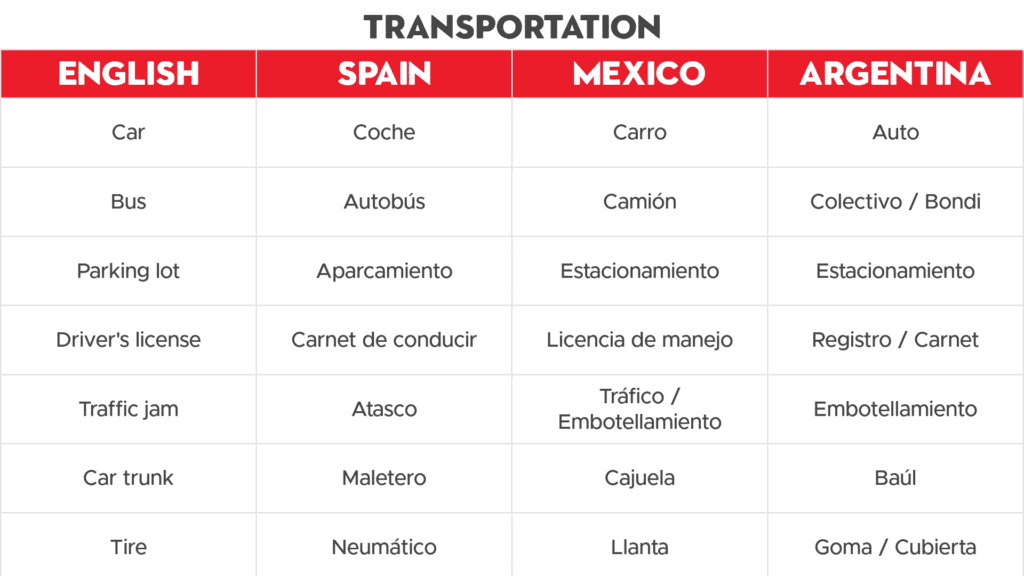
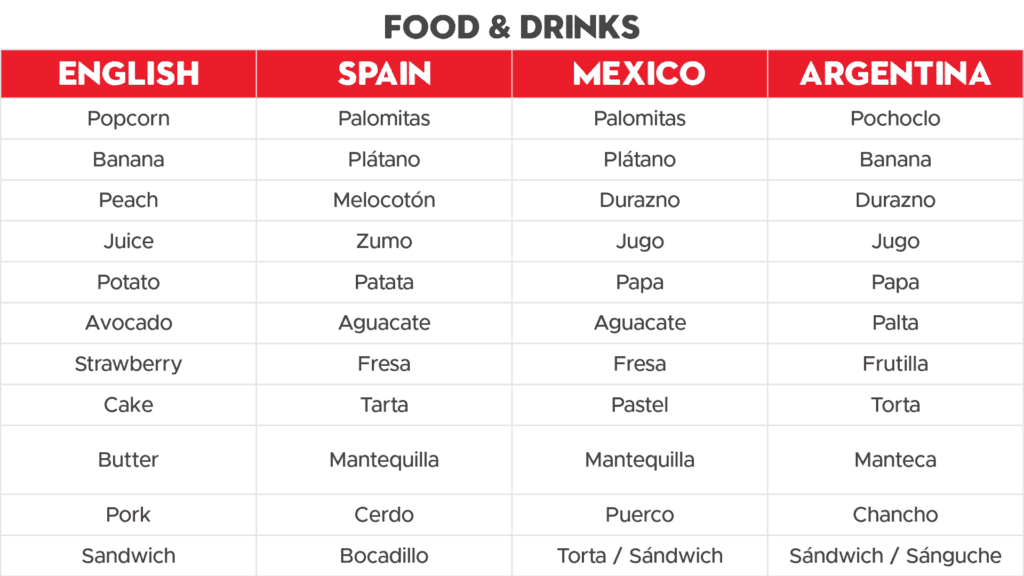
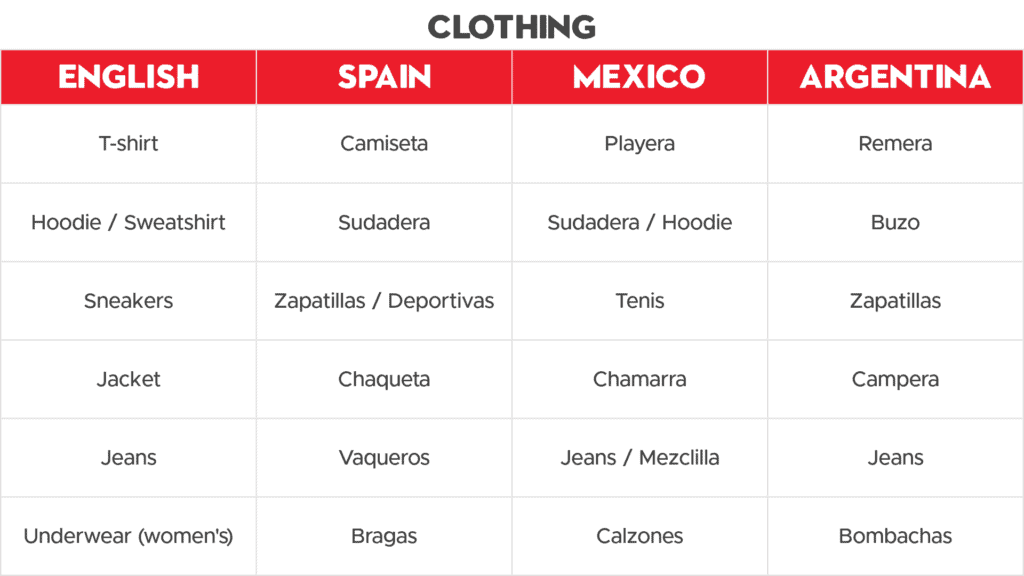
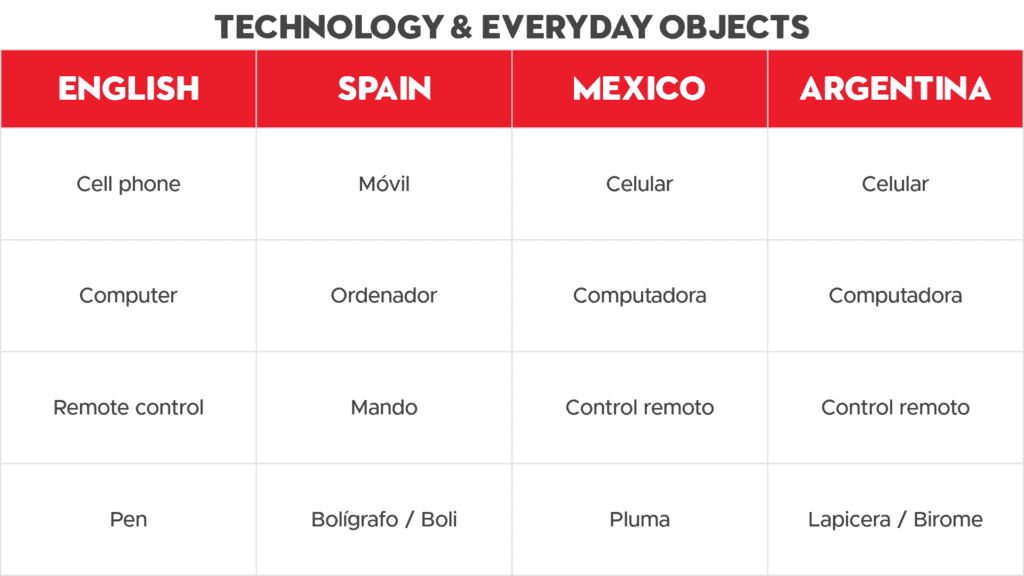
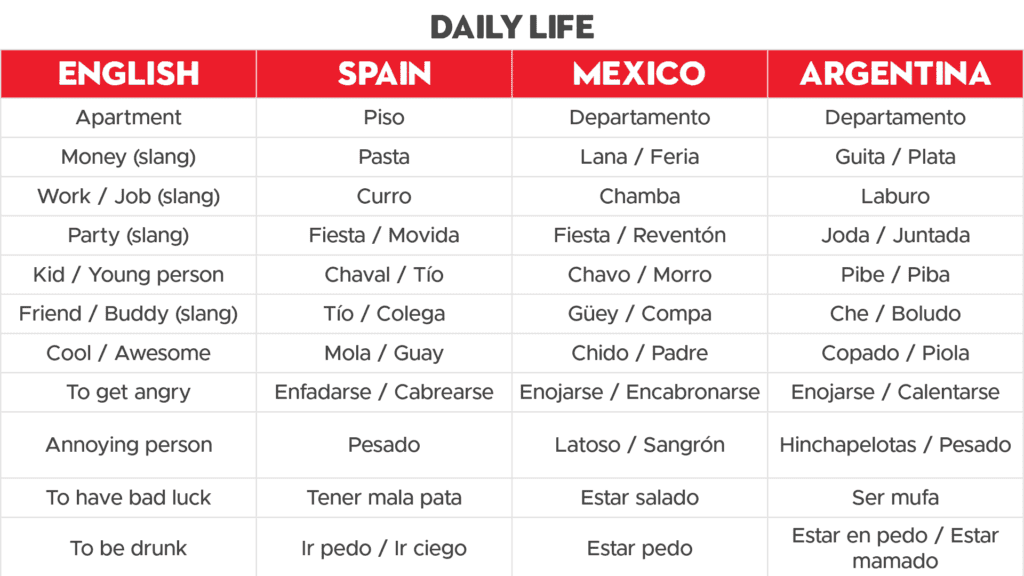
What does happen—and this is the fun part—is that every country has its own words for everyday things. And that’s where it gets interesting.
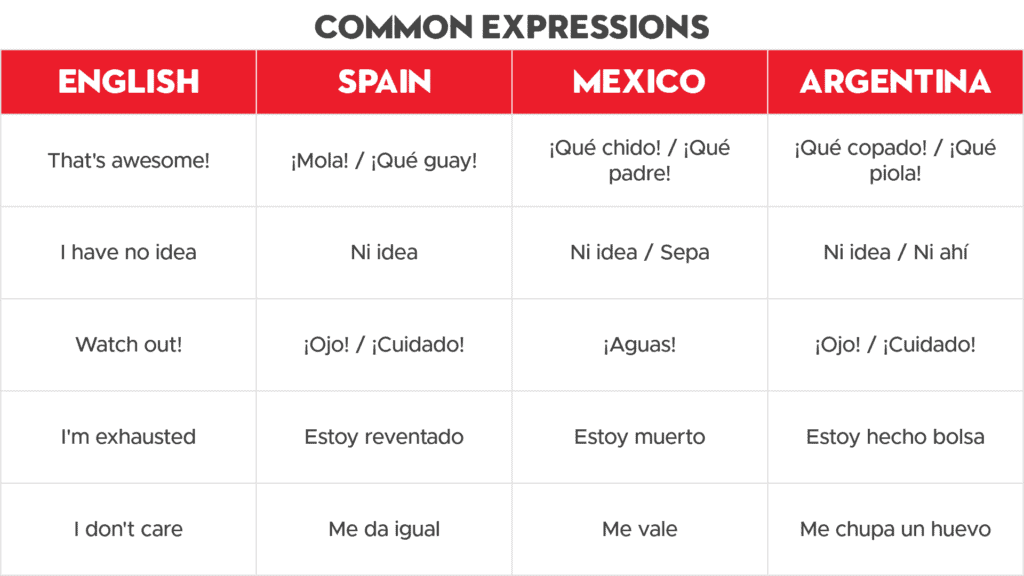
The Great Vocabulary Showdown: Spain vs. Mexico vs. Argentina
Get ready, because this list is long. And fun. And it will probably make at least one Spanish speaker say: “Seriously, you call it THAT?!”
So… Can They Understand Each Other or Not?
Absolutely. These differences are like the seasoning on the same dish. The dish is Spanish—rich, complete, and perfectly functional. The seasoning gives it regional flavor, personality, and yes, sometimes a moment of confusion. But nothing that can’t be resolved with context, curiosity, and a good smile.
So the next time someone asks whether we teach Mexican, Spain, or Argentine Spanish, the answer is simple:
We teach Spanish. The language that connects more than 500 million people around the world. After that, the seasoning is up to you.
Want to start learning? Write to us. We promise not to judge you if you say carro instead of coche. Well… maybe just a little.
प्रतिक्रियाएँ